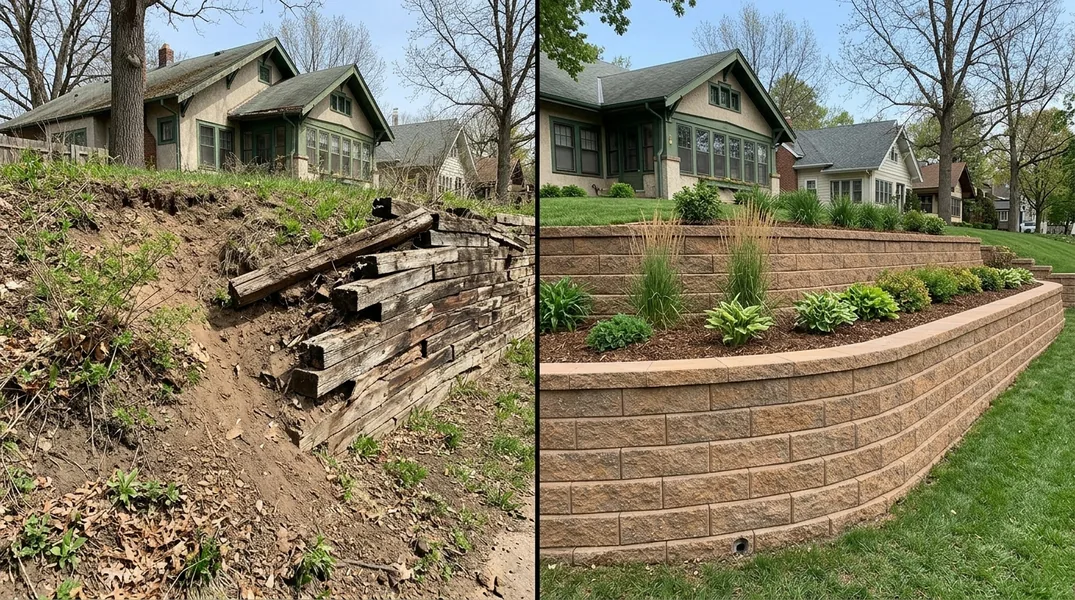
Why Retaining Walls Fail in Minneapolis: An Overview
A retaining wall is a significant investment in your property, designed to hold back soil and create usable space on a slope. In Minneapolis, these structures face a unique set of challenges that can lead to premature failure if not properly addressed. The city's freeze-thaw cycles are perhaps the most notorious culprit. When water in the soil behind a wall freezes, it expands, exerting immense pressure on the wall. As it thaws, the soil shifts, and this repeated cycle can weaken even well-built walls over time. Understanding these local conditions is the first step in protecting your investment.
Beyond the climate, poor drainage is a leading cause of wall failure. If water cannot escape from behind the wall, it saturates the soil, increasing its weight and pressure. This hydrostatic pressure can cause a wall to lean, bow, or even collapse. Many failing walls we see in Minneapolis were installed without proper drainage systems, such as weep holes or a gravel backfill. Additionally, inadequate foundation preparation or the use of subpar materials can doom a wall from the start. If you are noticing problems with your current wall, it may be time to consider professional Retaining Wall Repair.
Warning Signs of a Failing Retaining Wall
Spotting the early warning signs of a failing retaining wall can save you from costly repairs and potential safety hazards. One of the most common indicators is a leaning retaining wall. If you notice the top of the wall is tilting outward, even slightly, it is a clear sign that the soil pressure behind it has become too great. This often happens gradually, so regular inspections are key. Another red flag is a bowing retaining wall, where the middle of the wall bulges outward. This indicates that the wall is no longer able to withstand the load and is at risk of collapse. Both leaning and bowing are serious issues that require immediate attention from a professional.
Other warning signs include cracks in the wall, especially horizontal cracks, which can signal structural failure. You should also look for separation between the wall and the soil behind it, or soil washing out from underneath the wall. Weep holes that are clogged or not draining water are another common problem. In St. Paul and the surrounding areas, these issues are frequently exacerbated by our freeze-thaw cycles. If you observe any of these signs, it is crucial to seek expert advice. Ignoring them can lead to more extensive damage and higher repair costs.
How to Fix a Bowing or Leaning Retaining Wall
When you have a bowing retaining wall, a fix is possible, but it depends on the severity of the problem. For minor bowing, a technique called helical anchoring can be used to stabilize the wall without a full rebuild. This involves driving anchors into the soil behind the wall and connecting them to the wall face to counteract the pressure. For more serious cases, a partial or full rebuild may be necessary. The key is to address the underlying cause, which is almost always poor drainage. A proper repair will include installing a new drainage system, such as a French drain or a gravel backfill with a filter fabric, to prevent future water pressure buildup.
If your wall is leaning, the repair process is similar. Sometimes, the wall can be straightened by excavating the soil behind it and resetting the blocks or timbers. However, if the foundation is compromised, a more extensive repair is needed. For walls that are beyond repair, Retaining Wall Replacement may be the most cost-effective solution in the long run. A new wall can be designed with proper drainage and engineering to withstand the local climate. In some cases, switching to Concrete Retaining Walls can offer greater durability and longevity. If you are unsure which option is best for your situation, a professional assessment is essential.
Retaining Wall Repair Near Me: When to Call a Professional
For homeowners in Bloomington and across the Minneapolis area, knowing when to call a professional for retaining wall repair can be the difference between a simple fix and a major reconstruction. If you notice any of the warning signs mentioned above, it is time to get a professional opinion. A qualified contractor can assess the wall's condition, determine the cause of the failure, and recommend the most appropriate repair method. Attempting to fix a failing wall on your own can be dangerous and may not address the root cause, leading to repeated failures.
Professionals have the tools and expertise to properly diagnose issues and implement effective solutions. They can also ensure that the repair meets local building codes and standards. When searching for "retaining wall repair near me" in Edina or elsewhere, look for a company with a proven track record and a solid understanding of local soil and weather conditions. A professional will not only fix the visible problem but also address the underlying drainage and structural issues to prevent future problems. To get started, you can request a free estimate from a trusted local expert.
Preventing Future Retaining Wall Failures
Prevention is always better than repair. If you are planning a new Retaining Wall Installation, ensure it is designed and built to withstand the local climate. This means proper drainage is non-negotiable. A well-designed wall will have a drainage system that directs water away from the wall and prevents hydrostatic pressure from building up. This typically includes a gravel backfill, a perforated pipe at the base, and weep holes. Additionally, the foundation must be properly prepared, and the materials used should be suitable for our freeze-thaw environment. Investing in quality materials and professional installation can save you from costly repairs down the road.
For existing walls, regular maintenance is key. Keep weep holes clear of debris, and watch for any signs of movement or cracking. If you have trees or large shrubs near the wall, be mindful of root growth, which can also exert pressure. It is also a good idea to have your wall inspected by a professional every few years, especially if it is over 4 feet tall. If you are concerned about your wall's condition or want to discuss pricing for a new installation or repair, contact Minneapolis Retaining Wall at (612) 429-3704. Our team is here to help you protect your property and ensure your retaining wall stands the test of time.
Looking for a professional retaining wall contractor in Minneapolis? Minneapolis Retaining Wall responds fast for all your retaining wall needs.
Get a Free QuoteOur services: Retaining Wall Installation · Retaining Wall Repair · Retaining Wall Replacement