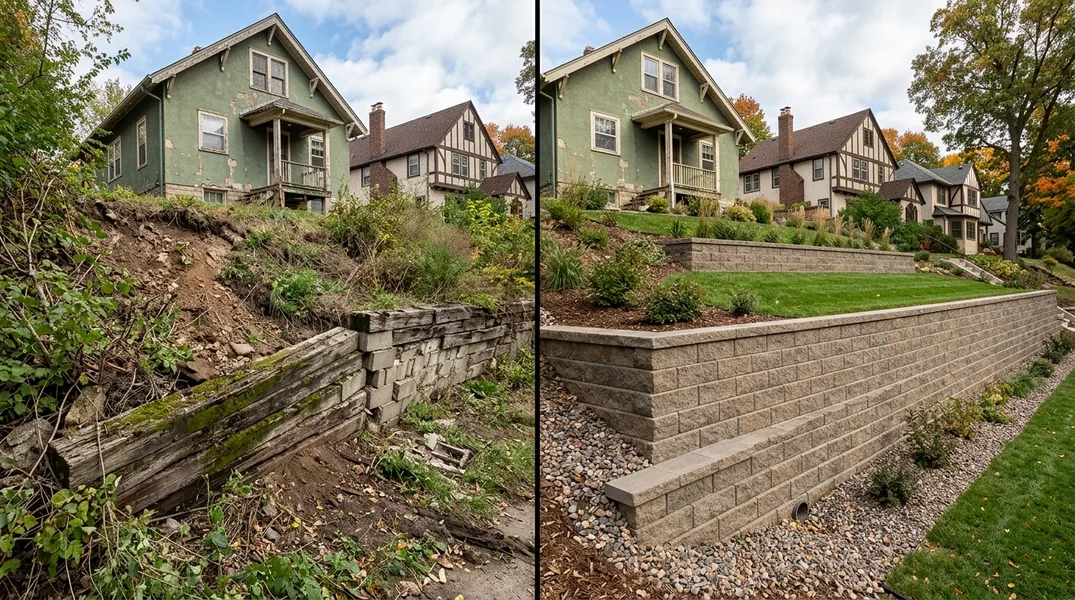
Why Minnesota Winters Are So Hard on Retaining Walls
If your retaining wall is leaning after this past winter, you are not alone. Minneapolis winters put retaining walls through one of the toughest freeze-thaw cycles in the country. Water seeps into the soil behind the wall, freezes, expands, and pushes outward with tremendous force. When it thaws, the soil settles, and the cycle repeats. Over several seasons, that relentless pressure can tip even a well-built wall.
The problem is compounded by our heavy spring snowmelt. Saturated soil weighs far more than dry soil, and hydrostatic pressure builds up behind the wall if drainage is poor. Many walls that looked perfectly fine in October start showing a visible lean by March or April. The good news is that a leaning wall is not always a lost cause. The key is figuring out whether the movement is cosmetic, structural, or a sign that the wall is close to failing.
Signs You Can Repair a Leaning Retaining Wall
Not every lean means the whole wall has to come down. If the movement is minor (think a slight tilt of an inch or two over several feet) and the wall is still holding back soil securely, Retaining Wall Repair is often the smarter, more affordable choice. Small leans are frequently caused by clogged weep holes, poor backfill drainage, or a settling footing that can be corrected without rebuilding the entire structure.
Crack repair is another common scenario. Hairline cracks in concrete or mortar joints that have opened slightly can usually be sealed and reinforced. The important distinction is whether the crack is stable or actively growing. A crack that has widened noticeably since last fall, or one that runs diagonally through block courses, suggests the wall is still moving and needs a professional assessment before you spend money on surface repairs. A local contractor can tell you quickly whether you are looking at a maintenance issue or a structural warning sign.
When Replacement Is the Only Safe Option
Some walls cannot be saved, and pretending otherwise puts your property and your family at risk. If the wall has rotated significantly, if the footing has heaved or washed out, or if the wall is bulging in the middle, Retaining Wall Replacement is usually the right call. A wall that is close to collapse can release tons of soil and debris without warning, especially during a heavy rainstorm or spring thaw.
Older timber walls are a frequent candidate for replacement. Wood rots, especially in our wet climate, and a rotting wall cannot be reliably repaired. Segmental block walls that were built without proper drainage or geogrid reinforcement often fail prematurely as well. In these cases, replacing the wall with a properly engineered system, including correct drainage and reinforcement, is the only way to get a lasting fix. Modern Concrete Retaining Walls are an excellent choice for homeowners who want maximum durability against freeze-thaw movement.
Retaining Wall Crack Repair and Leaning Wall Repair Near Me: When to Call a Pro
If you are searching for leaning retaining wall repair near me, the safest first step is a professional inspection. A contractor can evaluate the wall's footing, drainage, and structural integrity, then give you an honest recommendation: repair what is fixable, replace what is not. Trying to straighten a leaning wall yourself is risky, and improper repairs often make the problem worse by trapping water behind the wall.
Timing matters too. Addressing a leaning wall in spring or early summer gives you the best chance of a straightforward repair before the next freeze. If you wait until fall, you may be dealing with a wall that has already endured another full cycle of movement. If you are ready to find out where your wall stands, free estimate appointments are available, and you can reach Minneapolis Retaining Wall at (612) 429-3704. Homeowners in nearby communities like St. Paul and Edina face the same winter conditions and can request an assessment as well.
What to Expect During a Repair or Replacement Assessment
A thorough assessment starts with a visual inspection of the wall face, looking for lean, bulging, cracks, and missing mortar or block movement. The contractor will also check the drainage system, including weep holes and any French drain behind the wall, since poor drainage is the most common cause of winter damage. In some cases, they may dig a small test pit to inspect the footing and backfill material. This is how a professional determines whether repair or replacement makes sense.
You should leave the assessment with a clear recommendation and a written scope of work. Ask questions about drainage improvements, because any repair that does not address water management will likely fail again after the next Minnesota winter. If replacement is recommended, ask about reinforcement options and the expected lifespan of the new wall. For a general idea of what different options run, you can review pricing before your appointment so you can budget with confidence.
Protecting Your Wall Through the Next Minnesota Winter
Once your wall is repaired or replaced, a little maintenance goes a long way. Keep weep holes clear of debris, avoid piling snow against the wall during winter, and make sure downspouts and surface drainage are directed away from the wall. If you notice new cracks or a slight movement next spring, address it early rather than waiting for it to worsen. Small fixes are almost always cheaper than major structural repairs.
Homeowners in Bloomington and throughout the metro area deal with the same freeze-thaw challenges, and the same maintenance habits apply. If your wall is leaning and you are not sure whether it needs repair or replacement, do not wait for the next thaw to find out. Call Minneapolis Retaining Wall at (612) 429-3704 to schedule an inspection and get a clear, honest recommendation for your property.
Looking for a professional retaining wall contractor in Minneapolis? Minneapolis Retaining Wall responds fast for all your retaining wall needs.
Get a Free QuoteOur services: Retaining Wall Installation · Retaining Wall Repair · Retaining Wall Replacement